
50 Shades Design Exploration: Noguchi’s Akari Lamp
This design exploration was about “building skills in creative perception, interpretation, and representation, and learning to ‘see differently’ when translating something you see into different expressions of it. In this exploration, you pick any physical object – organic or artificial – and make 50 different versions/renderings of it, changing and varying the style for every iteration you render it in, as well as its form, without losing the essence of the thing.”
A Bit of Background Information
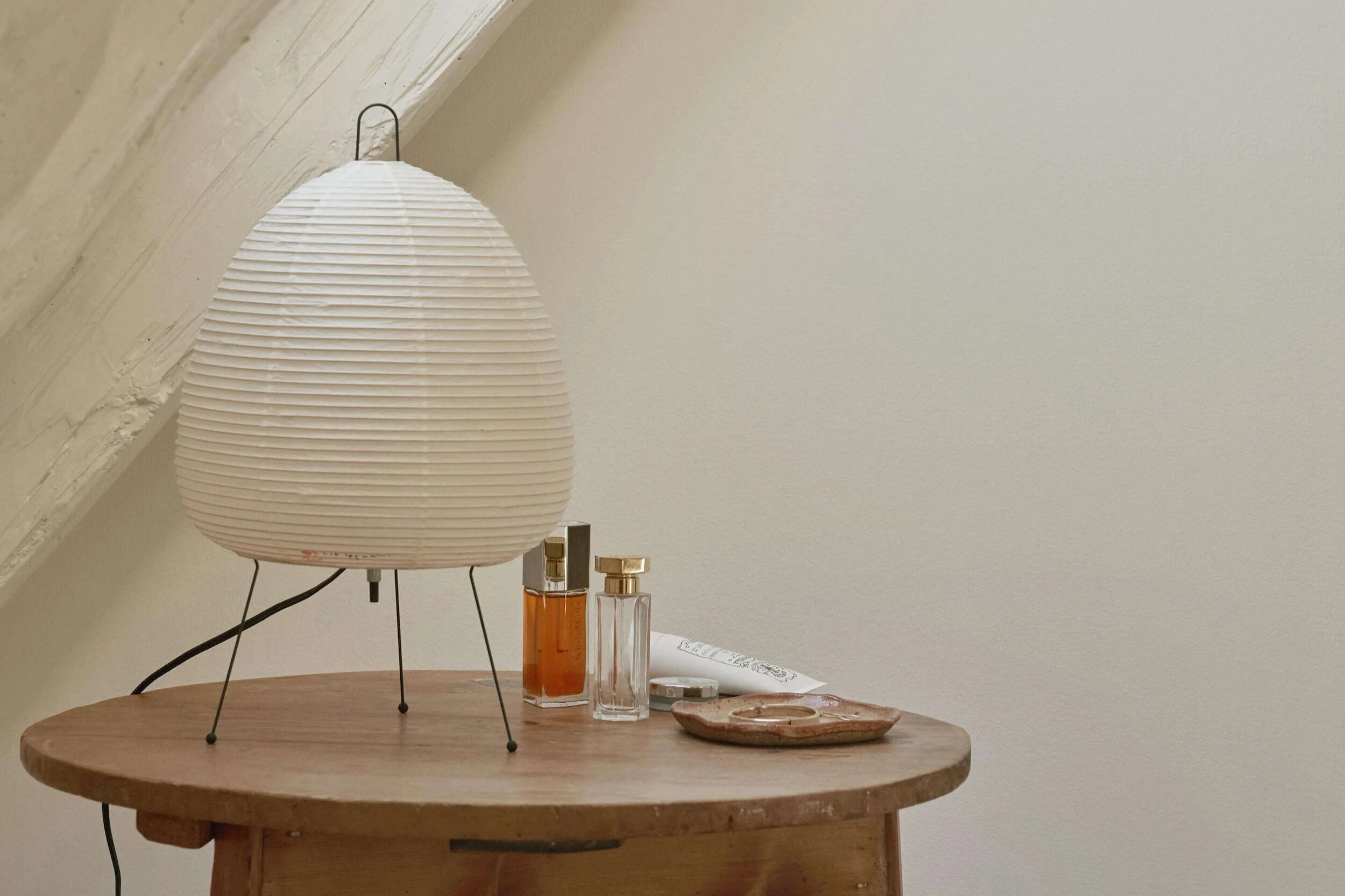
This was my favourite design exploration from my Ideation and Prototyping class at NYU taught by the wonderful Dalit Shalom. For my object, I chose to sketch 50 iterations of Isamu Noguchi’s Akari 1A light sculpture. Inspired by the lanterns fisherman used to guide them along the Nagara River in Japan, Noguchi learned traditional Gifu methods of paper construction and designed these lamps out of bamboo frames and handmade (washi) paper. He called them Akari, meaning “light” in Japanese.
Project Objectives
Choose an object to work with.
Make 50 different renderings of the object using different tools, materials, techniques, mediums, and experimenting with different styles, forms, and treatments while still keeping the object recognizable.
Scope
Design Exploration
Tools
Procreate, Illustrator, Handmaking
Role
Ideation and Prototyping (Exploration, Experimentation + Documentation)
Team
Solo
Duration
2 hours
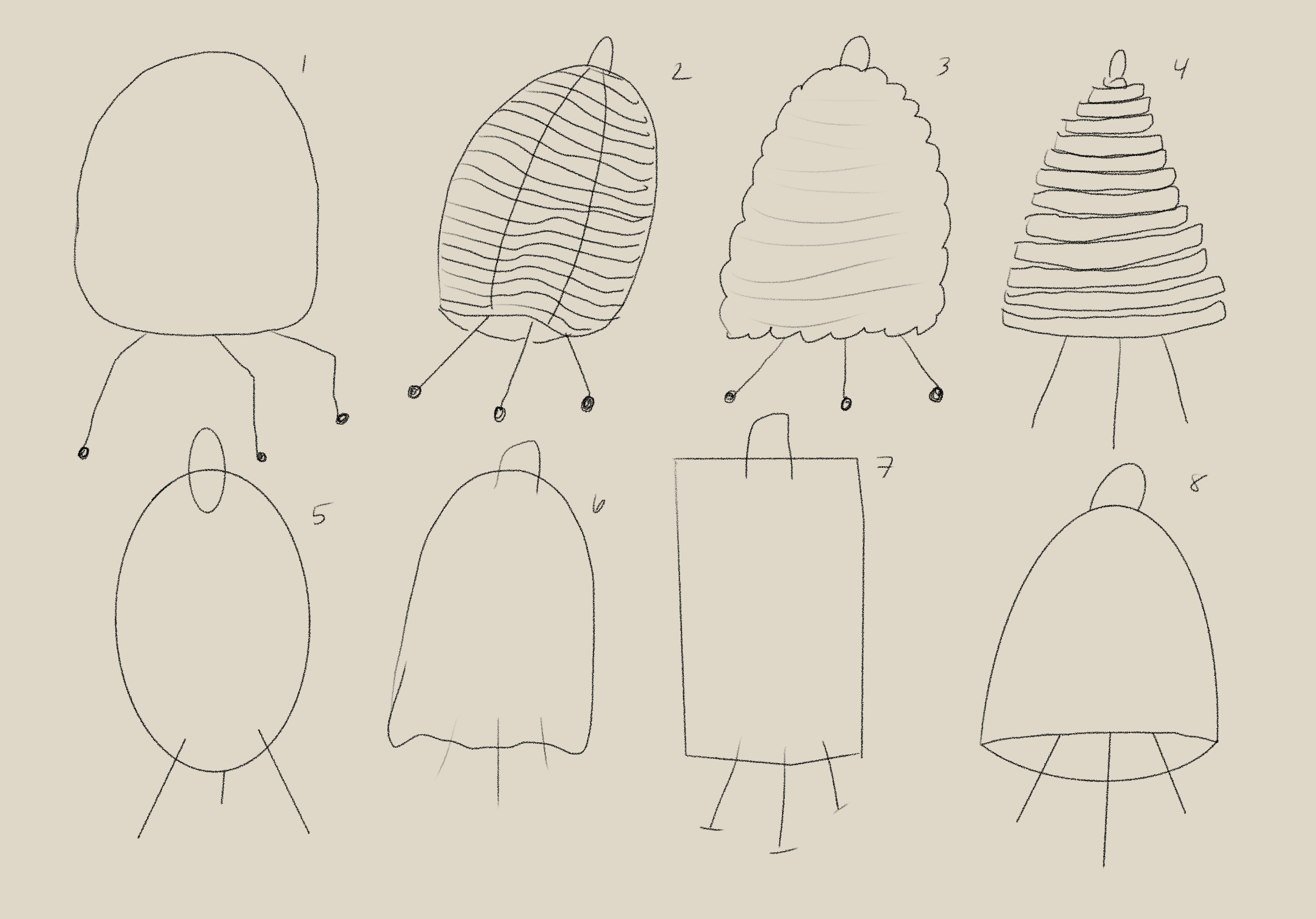
I started off by doing 8 super rough sketches from memory, without looking at a photo of the lamp for reference. I thought this would be a good way to see what the most important parts of the light sculpture were to me — the aspects about it that I remembered in the most detail. Based on what I drew, this is one of my favourite light sculptures because of the organic shape, and the way that the light seeps through the thin paper at just the right amount.
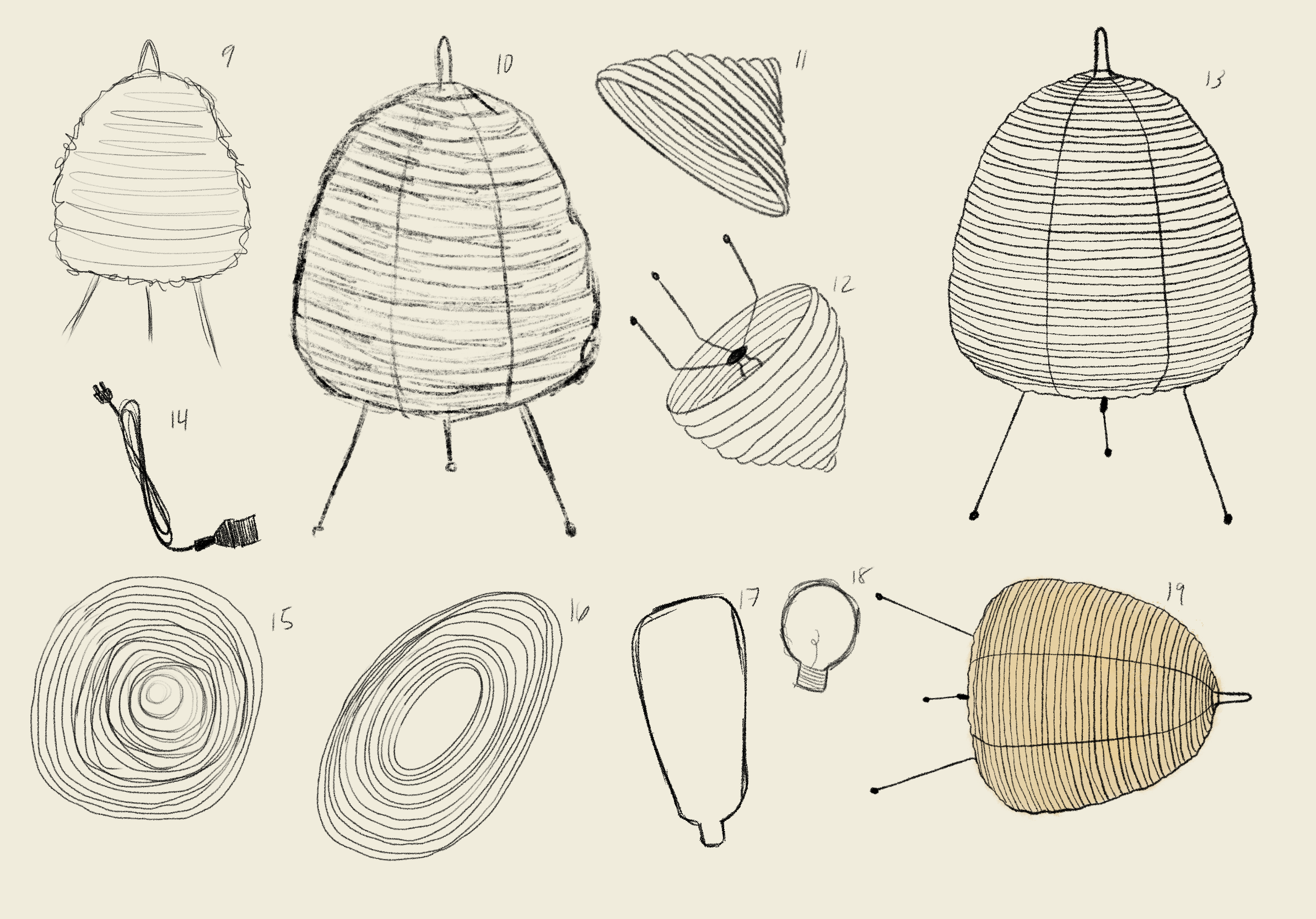
Next, I started sketching in a bit more detail. This helped me to understand the light sculpture piece by piece:
sketch 09: super rough but more detailed sketch (began focusing on the layers)
10: even more detailed (focused on layers and vertical bamboo support pieces)
11: lamp being slowly opened after being packaged flat in box
12: lamp upside down (figuring out the mechanics…where does the bulb go? How are the legs attached?)
13: my favourite sketch. A good amount of detail but still simple.
14: just the plug
15: lamp shade flat from aerial view
16: lamp shade flat from slight-side aerial view
17: bulb holder
18: bulb
19: first bit of colour added (focused on a warmer yellow/orange)
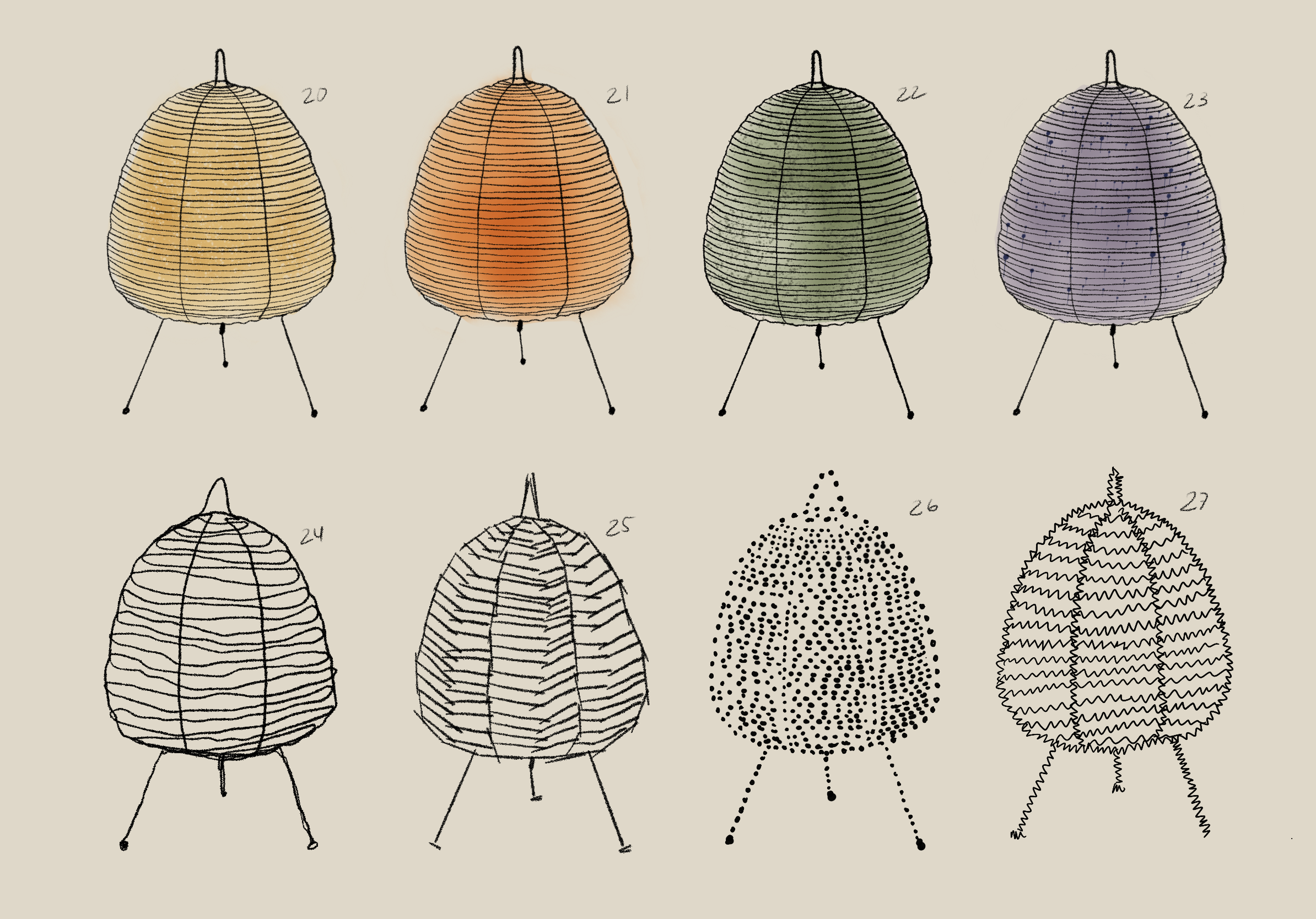
After I understood the how each piece was arranged to form the lamp as a whole, I went on to play around with colour. These light sculptures are only available for purchase with a normal warm-white bulb but I thought it would be cool to explore how the lamp might change if the lighting was different colours. I also started altering the way I was sketching:
24: sketched using only one consecutive line
25: sketched using only straight lines
26: sketched using only dots
27: sketched using only zig-zags
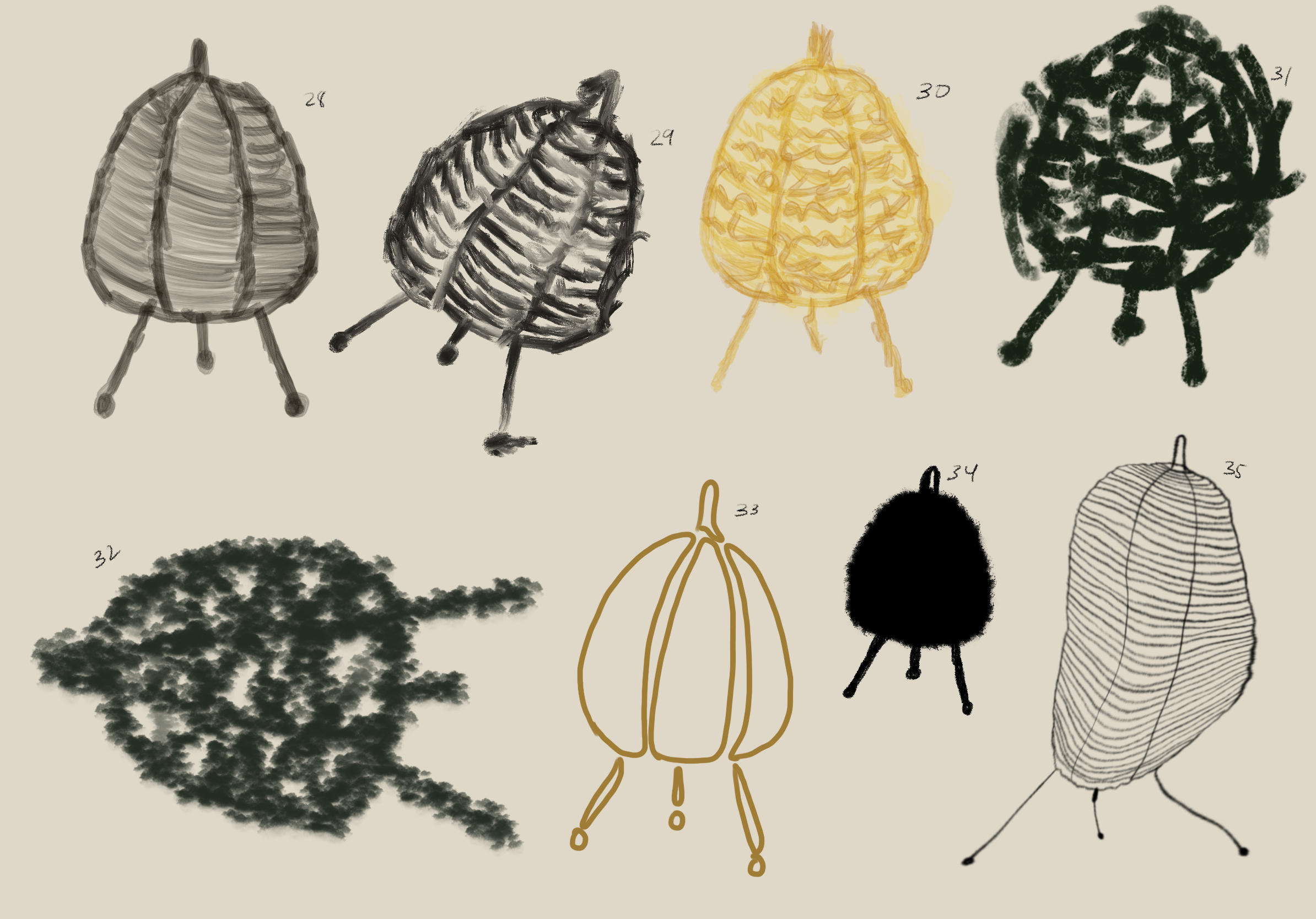
For sketches 28 to 35, I played around with different types of paint and distortions on Procreate:
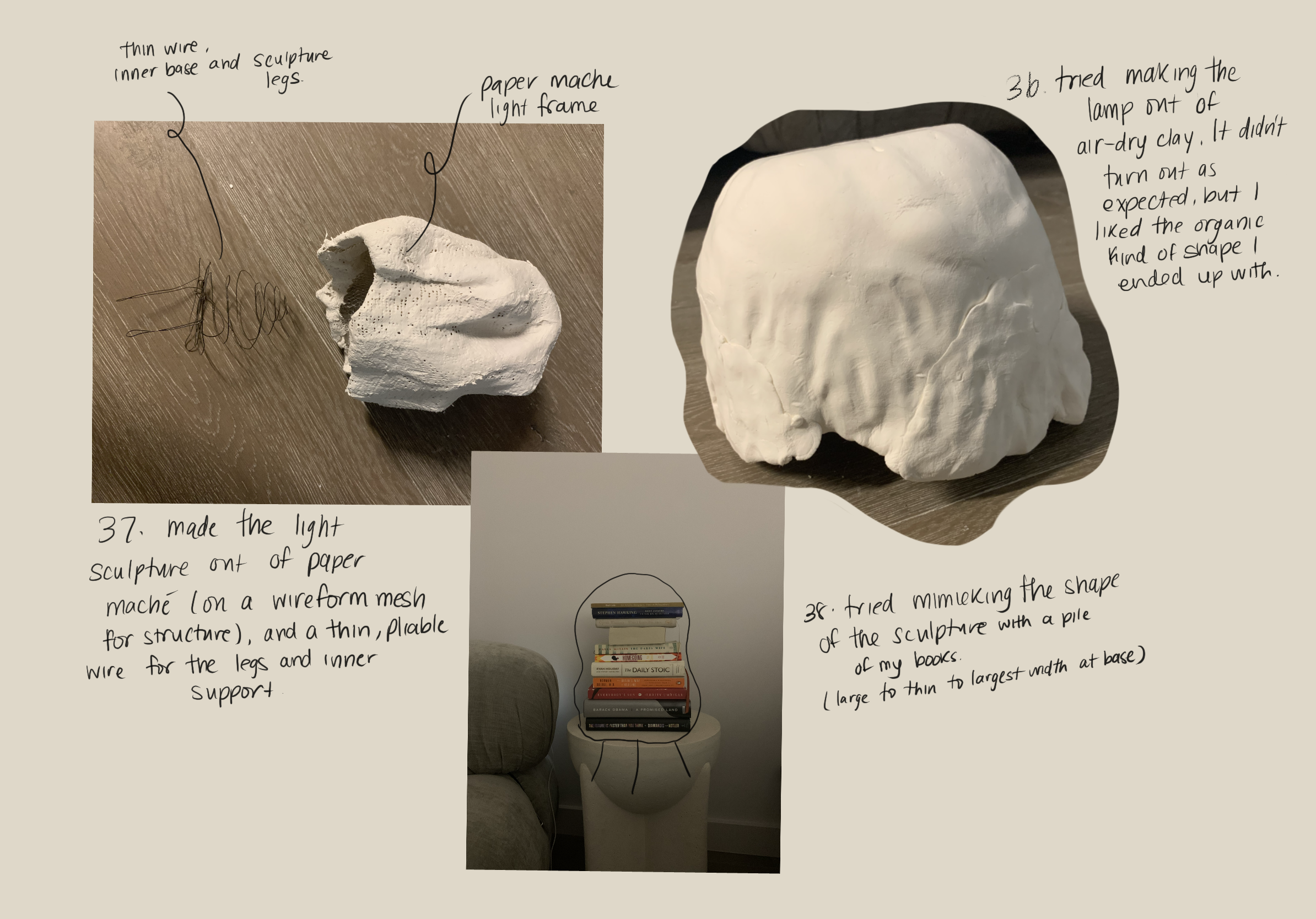
Then, I created three physical iterations of Noguchi’s Akari A1:
After making the physical 3D sketches I began feeling like any other sketches I did would be redundant. So I thought about how I could sketch this light sculpture 12 more times in fun/creative/innovative ways:
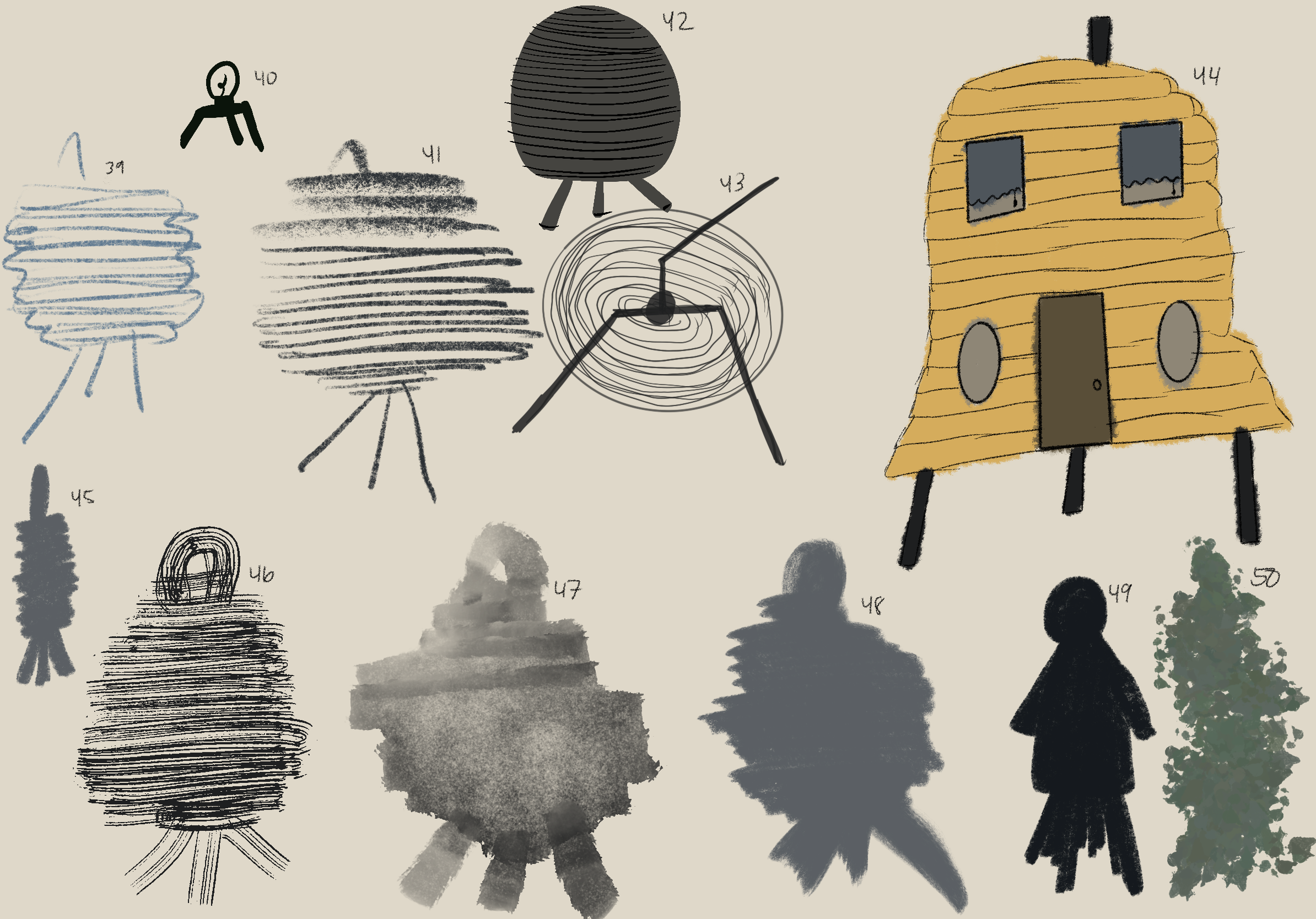
sketch 47: very abstract watercolor iteration
48: even more abstract chalk iteration
49: a human I started seeing in the previous two sketches
For sketch 44, I decided to draw a house inspired by the design of the lamp.
Final Thoughts:
I really enjoyed this assignment although I did feel stuck creatively at times. It was challenging to brainstorm so many ways to sketch the same item and since the Akari A1 lamp is a very simple design in the first place, I found myself thinking a lot about abstraction and mechanics but also about the importance of simplicity and functionality. Starting off by sketching solely from memory was eye-opening because I’ve looked at the lamp in depth on multiple occasions but still couldn’t remember every single detail. Now, after 50 sketches, I feel like I know the lamp like the back of my hand (although taking the next step and going into even more physical iterations would probably bring more challenges and details that I still didn’t fully notice). This exercise is a great start to figuring out what works and what doesn’t with the design of a product, and also gives you the chance to get as creative as possible and use your imagination to make it your own.