Jelly
an interactive robotic light installation composed of several handmade jellyfish and coded using C++ and Arduino
Project Description
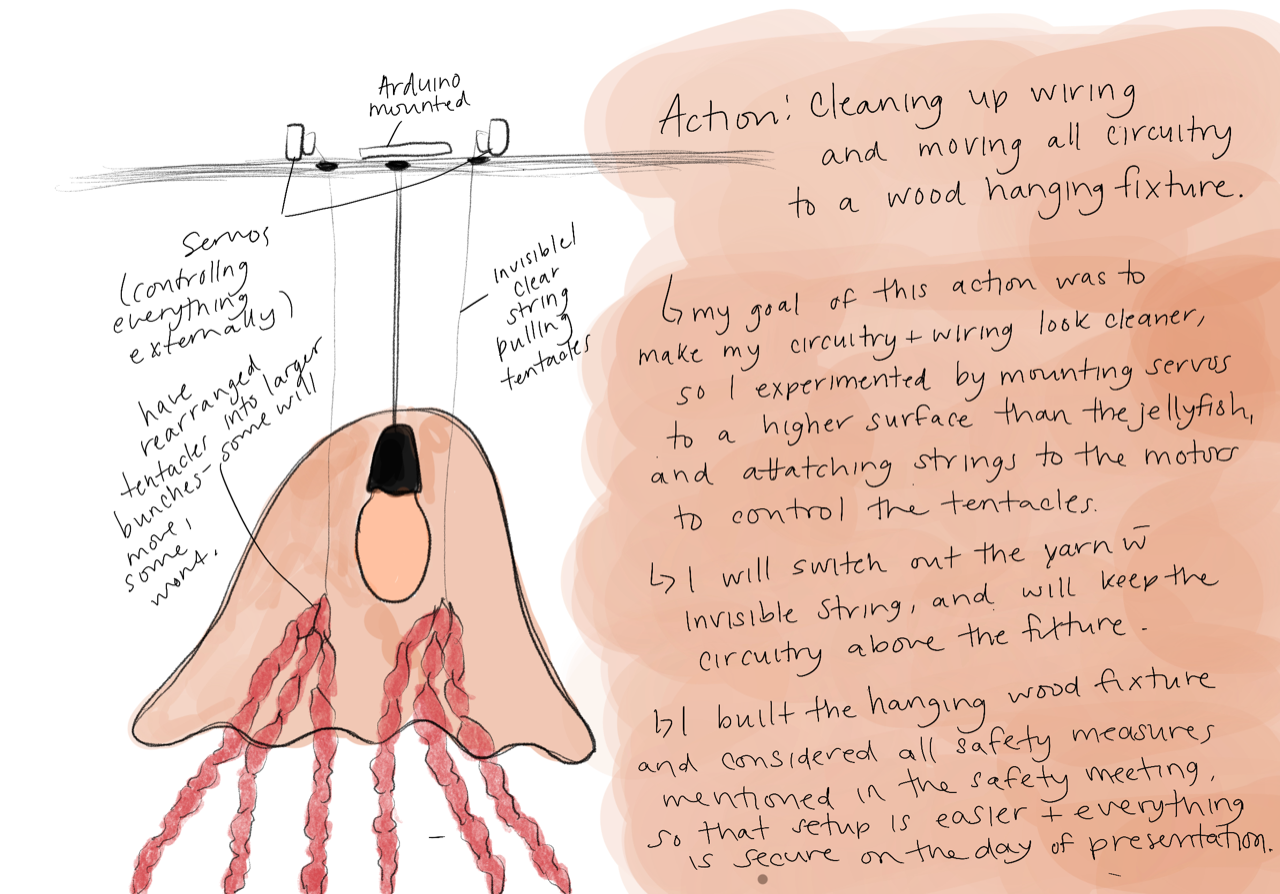
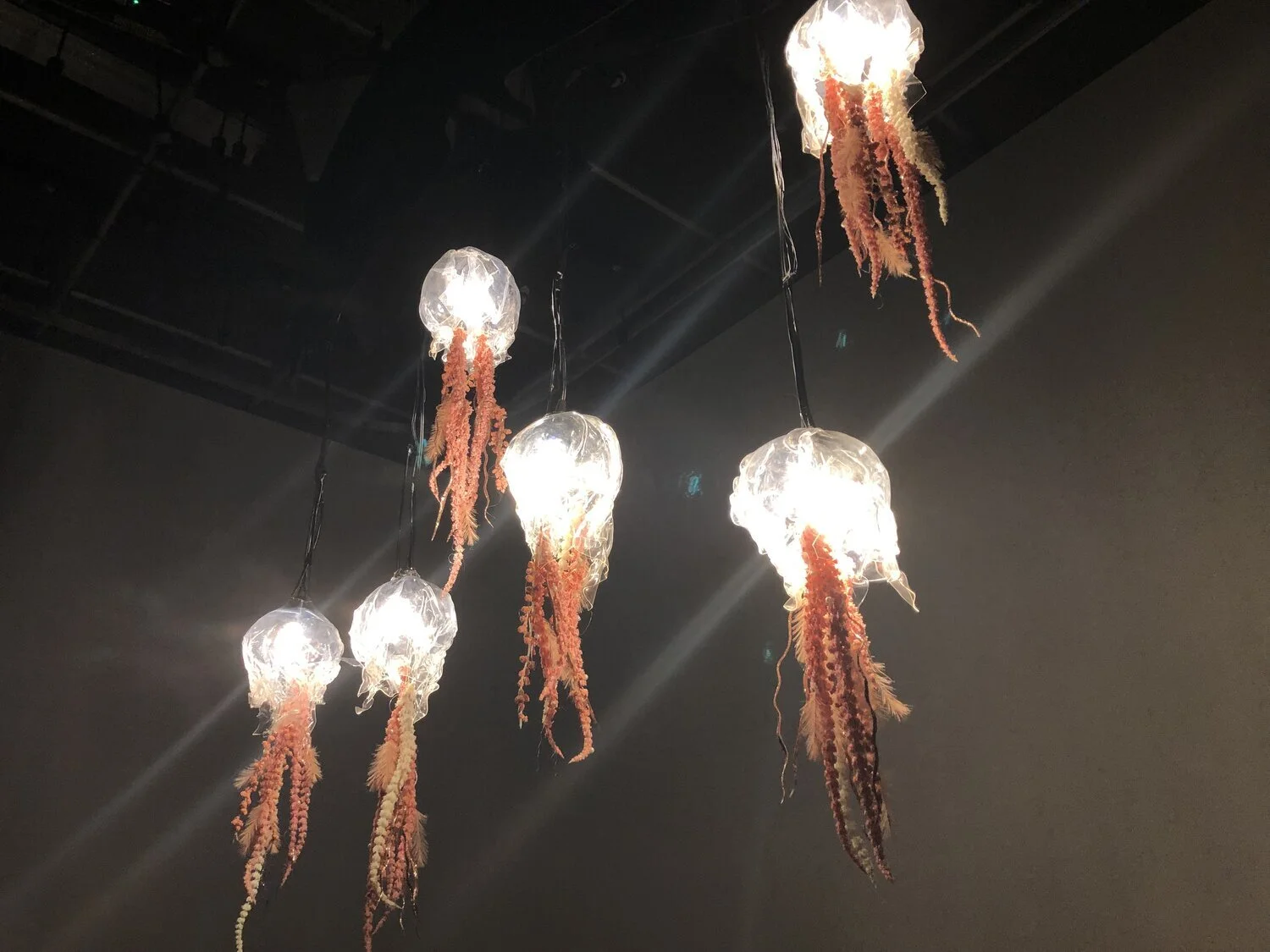
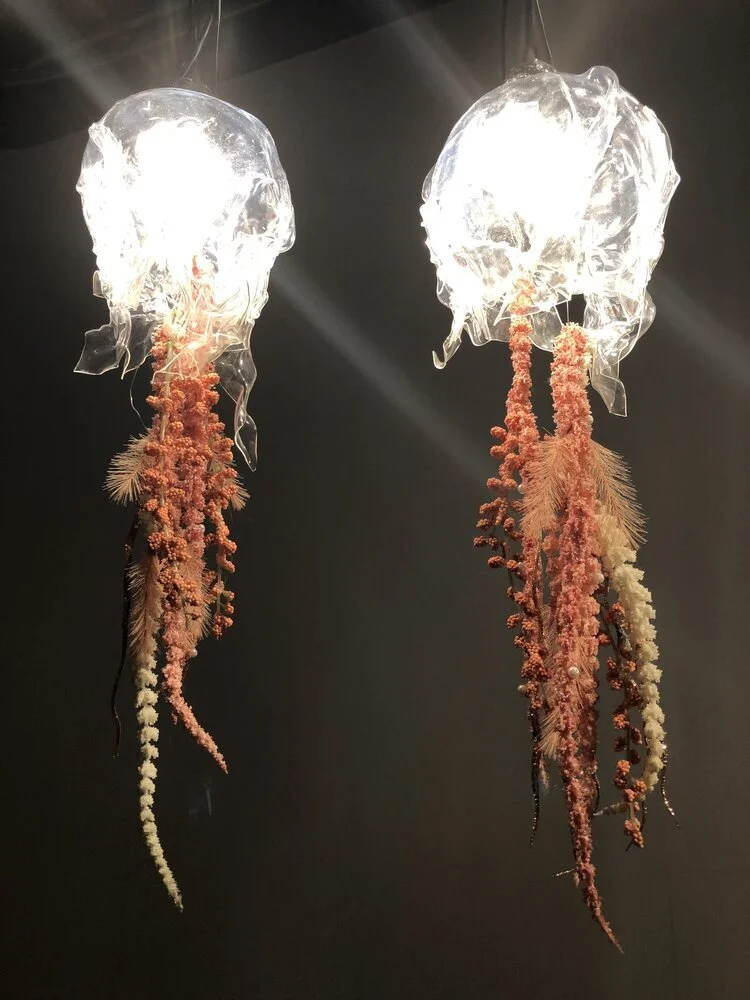
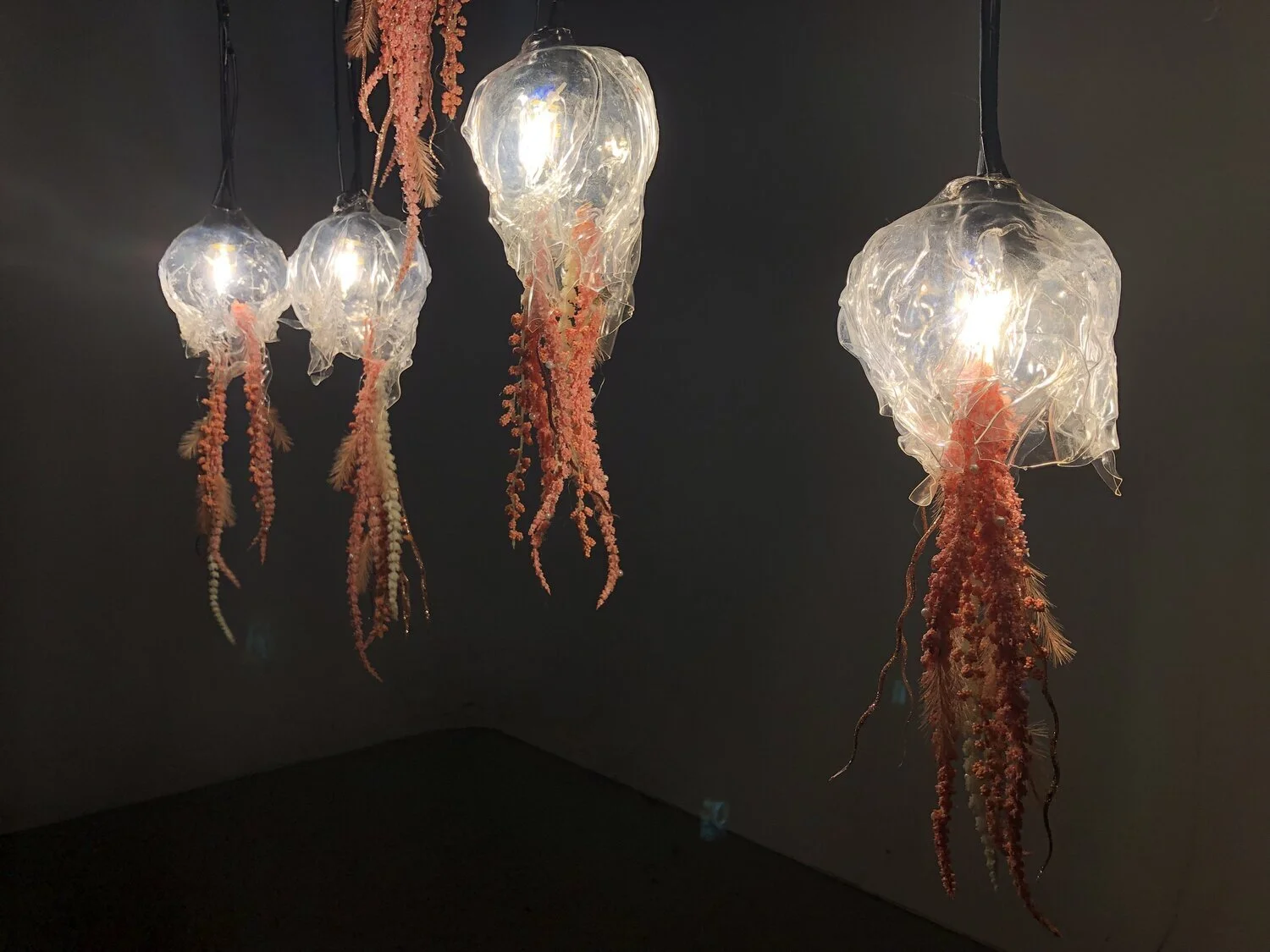
Jelly is an interactive light installation composed of several handmade jellyfish suspended from the ceiling at various heights. Each creature encompasses two servo motors that allow the tentacles to move in natural, rhythmic sequences that fluctuate within the swarm. Viewers are invited to interact with the installation - the movements of the jellyfish heighten as they are approached. As the viewer retreats and creates a sense of distance, the creatures feel less threatened and begin to move normally again.
Project Objectives
Design and hand-make the jellyfish and their structure(s)
Write C++ code via Arduino to control the servo motors
Adjust code to react to viewers walking around the installation
Scope
Installation Design, Code
Tools
Arduino
Role
Prototyping, Interface Design, Coding
Team
Self-directed; Final undergrad thesis
Duration
4 months (~500 hours)
*Version 1.0 prototyped with Java; Version 1.2 sensors and servos coded with C++ via Arduino microcontrollers.
This entire project was centered around the following question:
How can we combine design and technology to completely redefine how people are willing and able to engage with the spaces that they spend most of their time?
I was interested in figuring out how better designing public spaces with the human in mind could lead to more meaningful interactions and, in turn, more fulfilling lives.
The Process — how did I reach the final iteration?
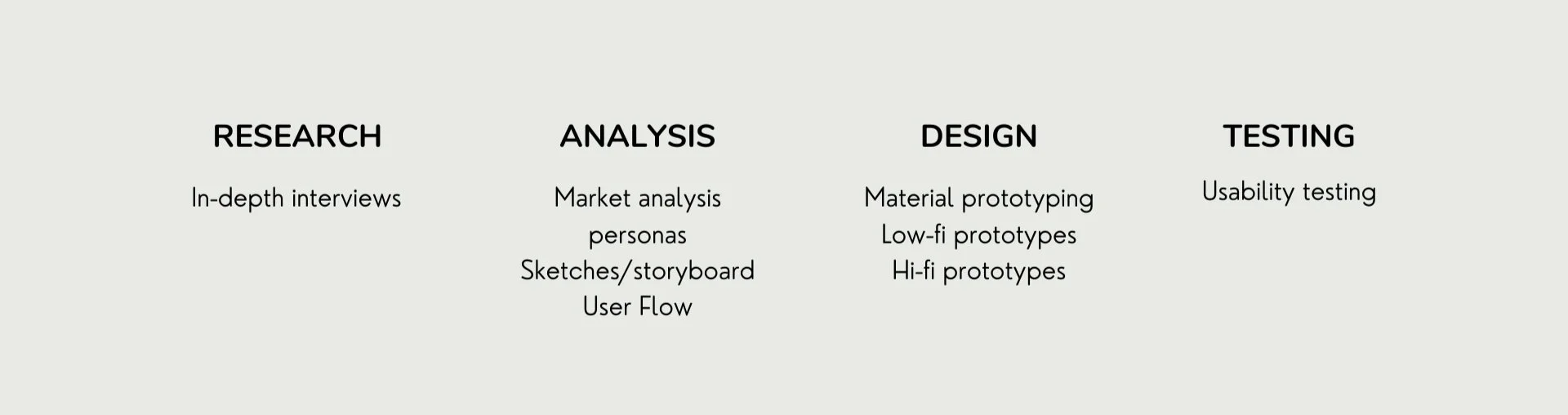
Research Method
User Interviews — Over the course of two weeks, I conducted 20 in-depth interviews with people ages 18-30. Speaking to a wide range of people allowed me to gain a lot of insight into how and why people navigate certain public spaces. I asked about their experiences being in public spaces that had interactive installations on display and how they feel in those spaces compared to ones without. I chose to use non-direct questions to find insight about the user experience that I wasn’t previously aware of. Honest, unbiased participant feedback was critical to my research.
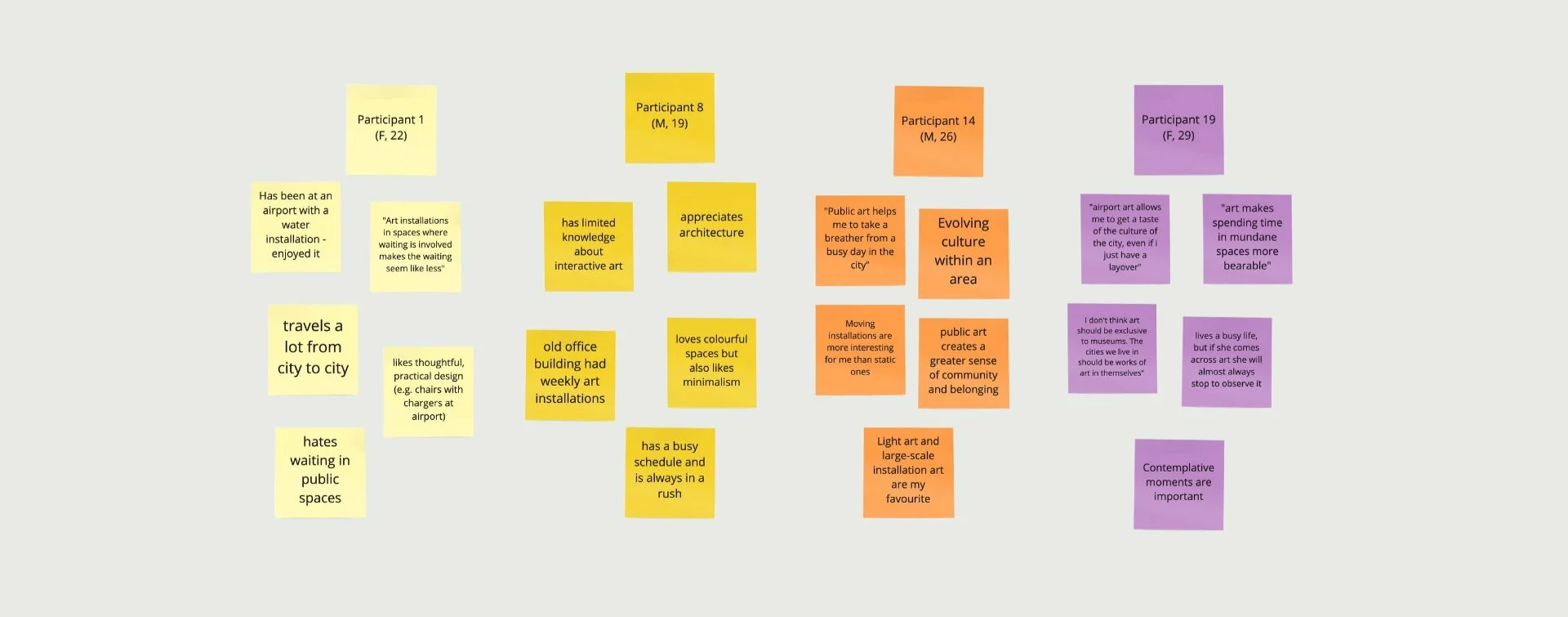
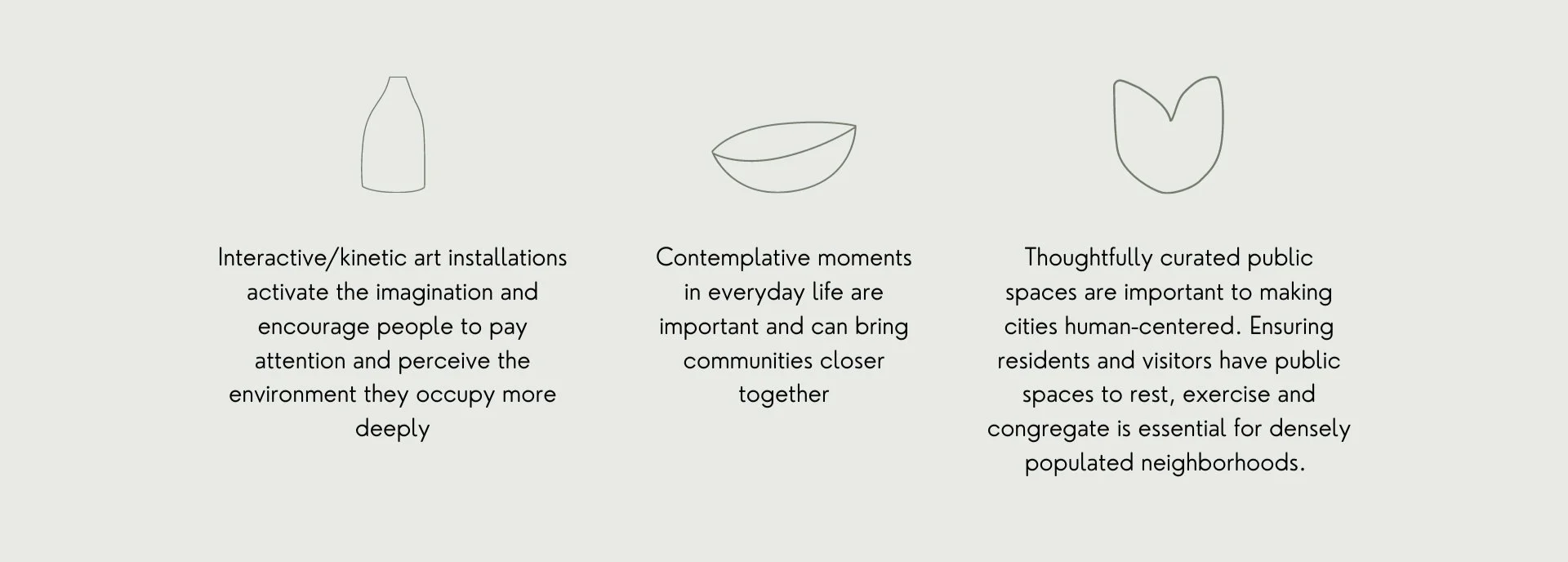
I compiled my research into three key insights:
Analysis
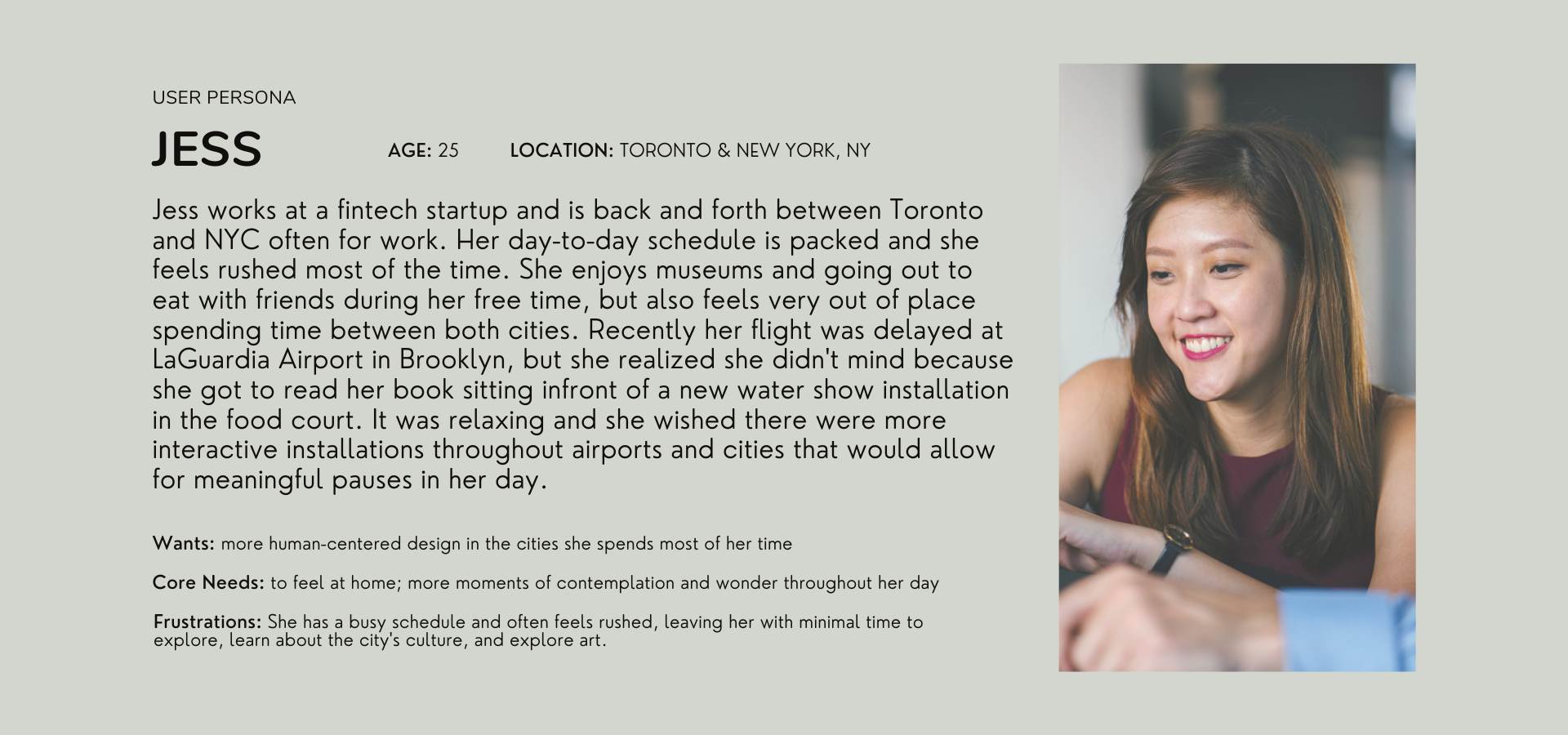
Persona
Sketches