Persona Playbook
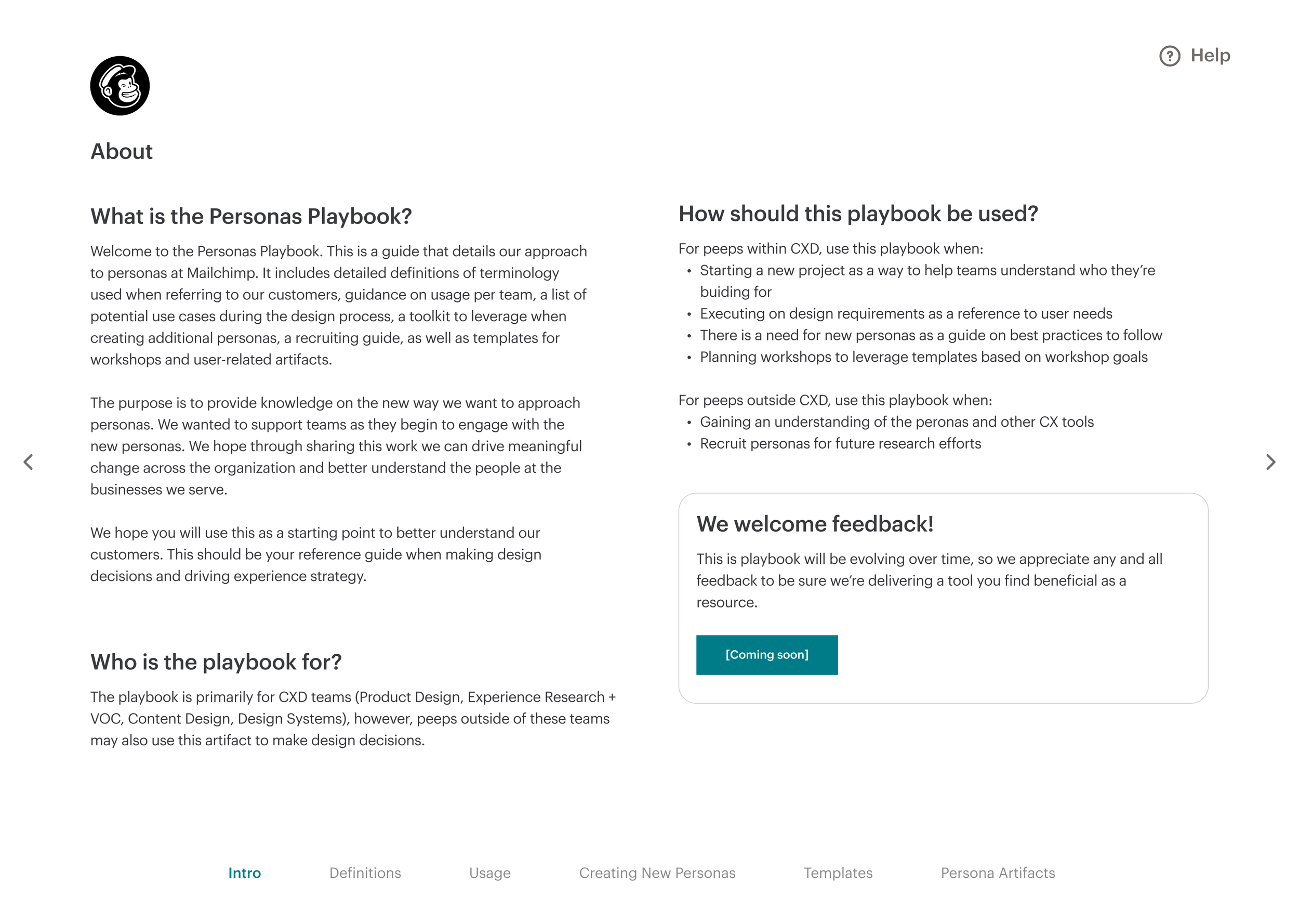
a centralized resource and internal tool that serves as a guide for defining and leveraging current personas.
*please note certain information in this case study has been redacted.
The Problem
Connecting researchers and designers across an organization through thoughtful and engaging internal tools is necessary in improving employee skills through seamless and meaningful experience strategies. Our team worked to create an interactive guide that details our approach to personas within the company.
Objectives
Conduct user research to synthesize and develop into personas
Design a guide that details our approach to personas
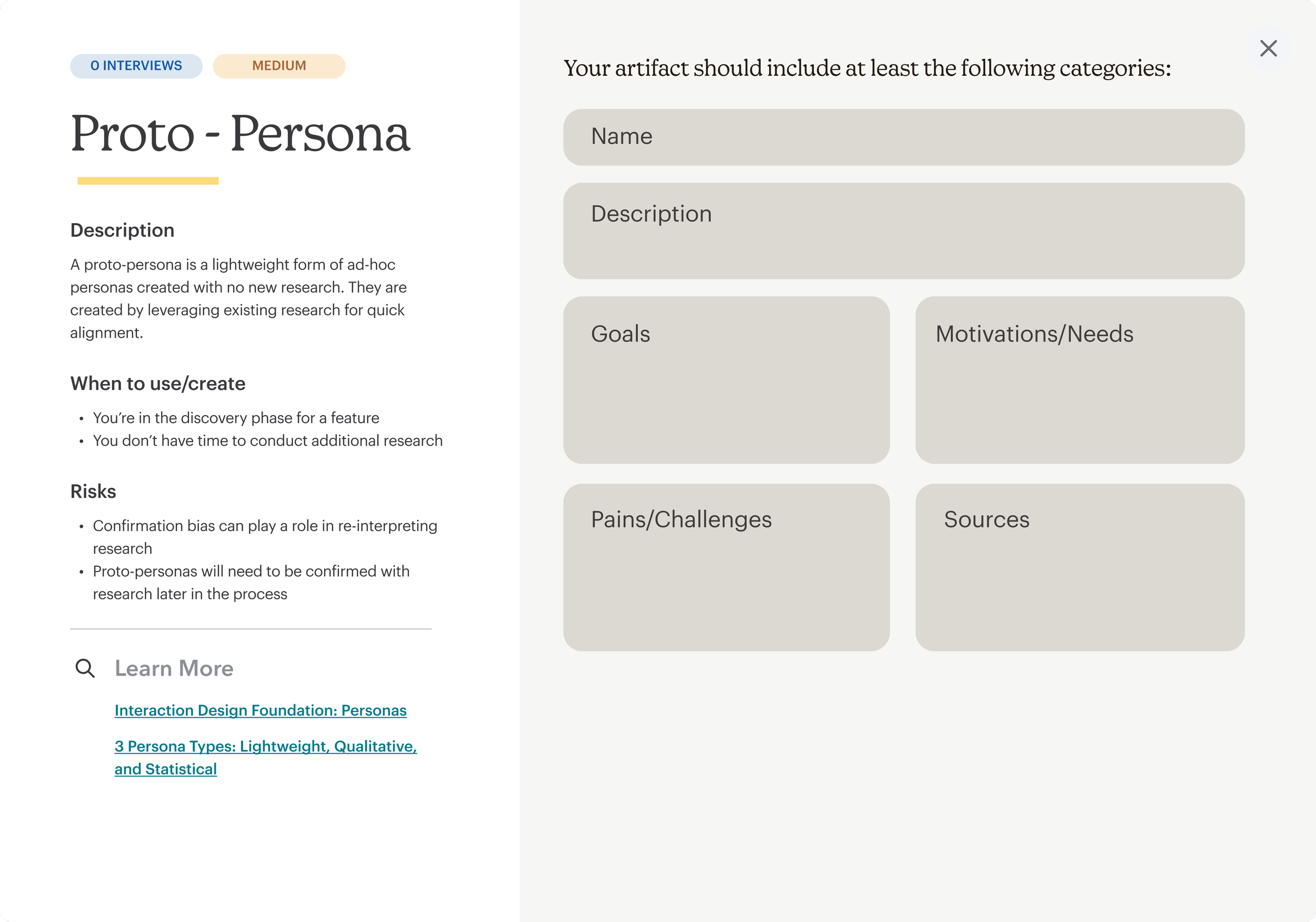
Design templates for team workshops and user-related artifacts
Scope
Research, Synthesis, Redesign
Tools
Figma, Miro, FigJam
Role
User Research, Prototyping, UX/UI Design
Team
CX Insights & Service Design Team
Duration
12 weeks
Research Methods
What methods of UX research did we use to help drive clarity and focus to our solution, and why?
01 — User Interviews
The team conducted over 100 user interviews over the course of several months, to ensure that we had a deep understanding of all the types of users at Mailchimp. We worked collaboratively to define our research objectives, designed an interview guide, conducted the interviews, and synthesized the findings.
02 — Data Analysis
To further validate our initial findings, we observed user behaviour over several stages of the customer journey via online data platforms including FullStory. We were able to visually observe qualitative and quantitative data and synthesize it into key insights to contribute to our existing customer knowledge.
Employees value a guided experience that is informative, organized, engaging and easy to integrate across teams
Including workshop templates and user-related artifacts is also necessary
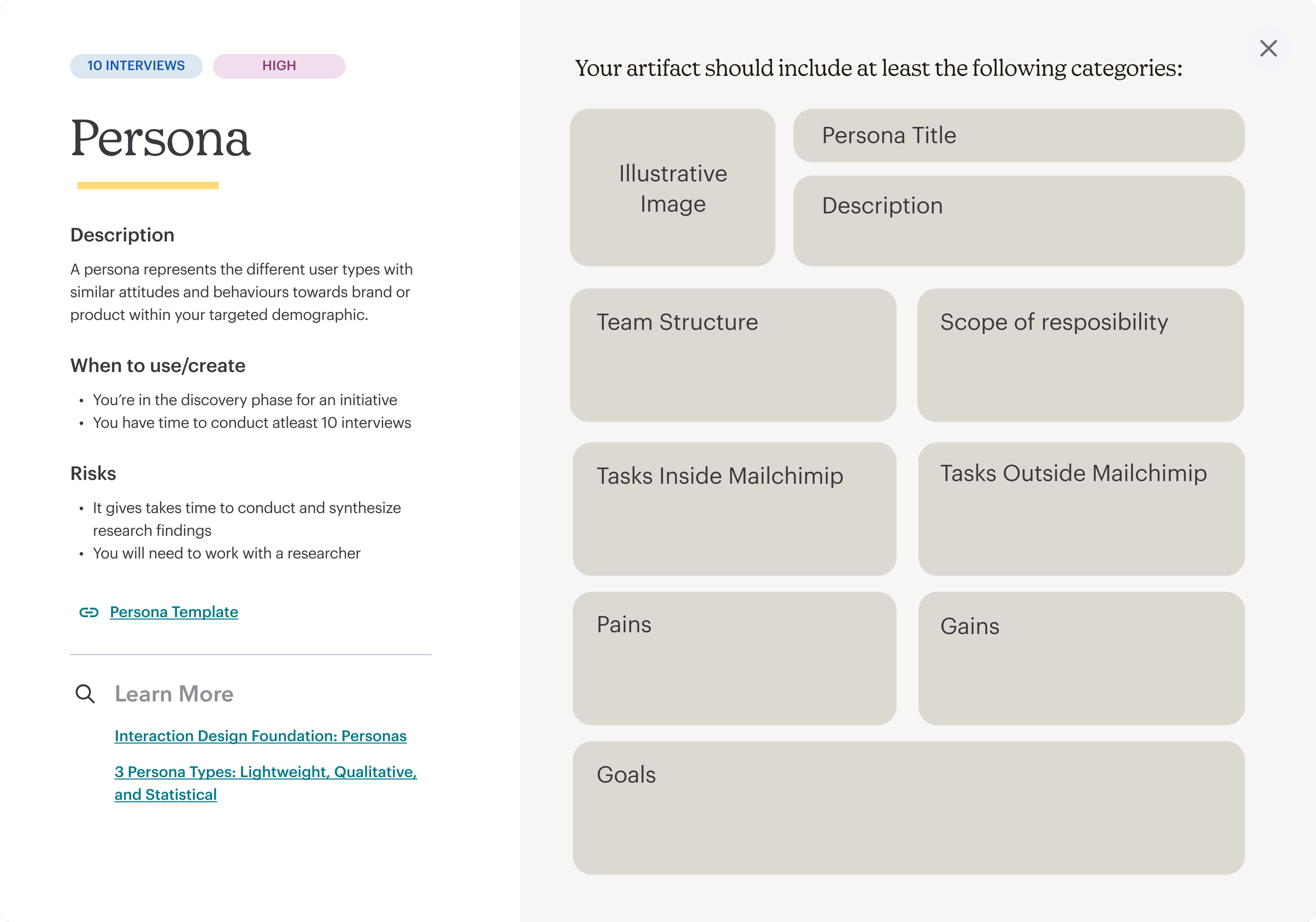
With multiple personas, we need the information on each to be concise yet detailed
Pairing custom images with each of the personas will aid in memory and understanding of customers across all design teams
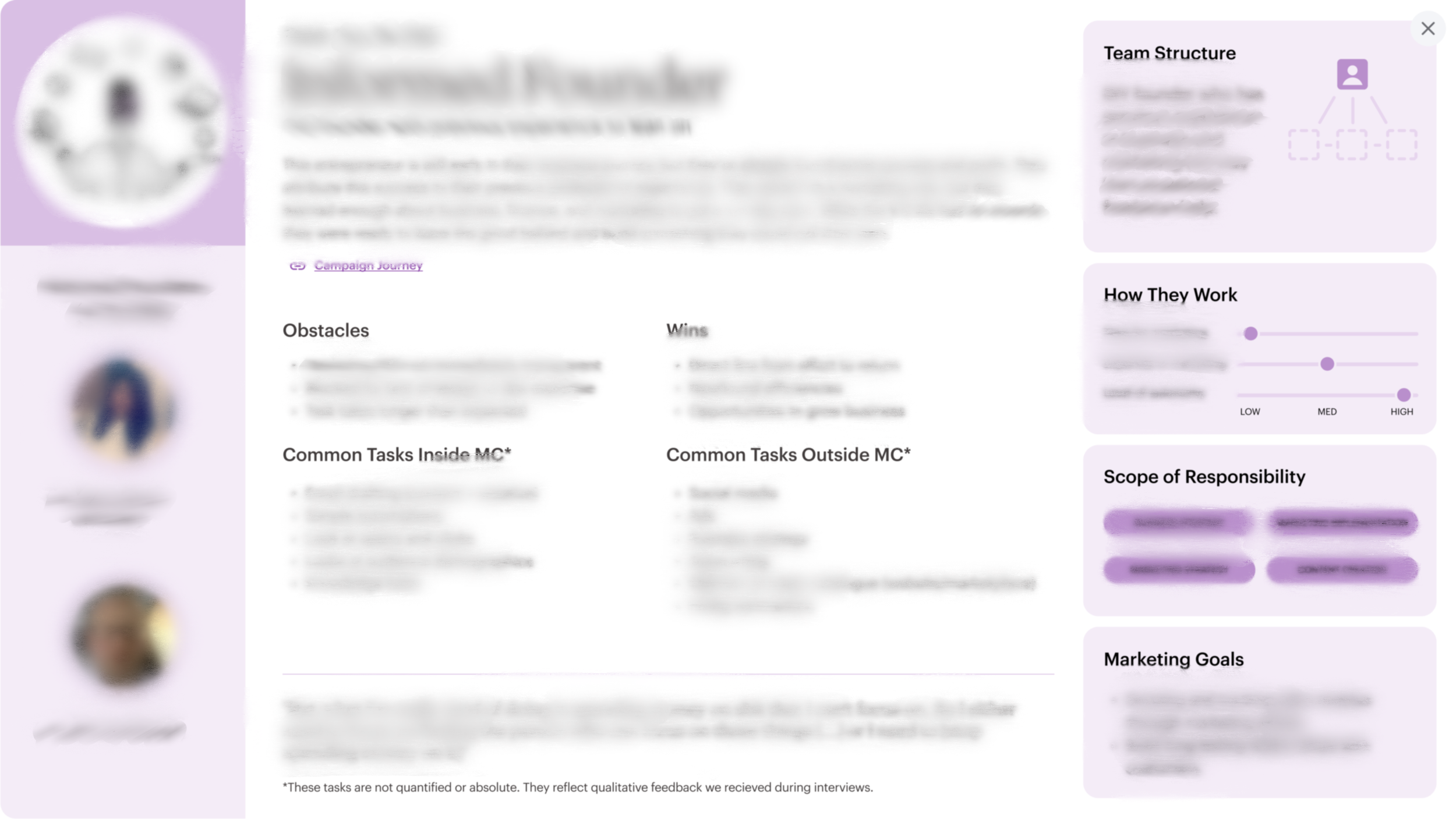
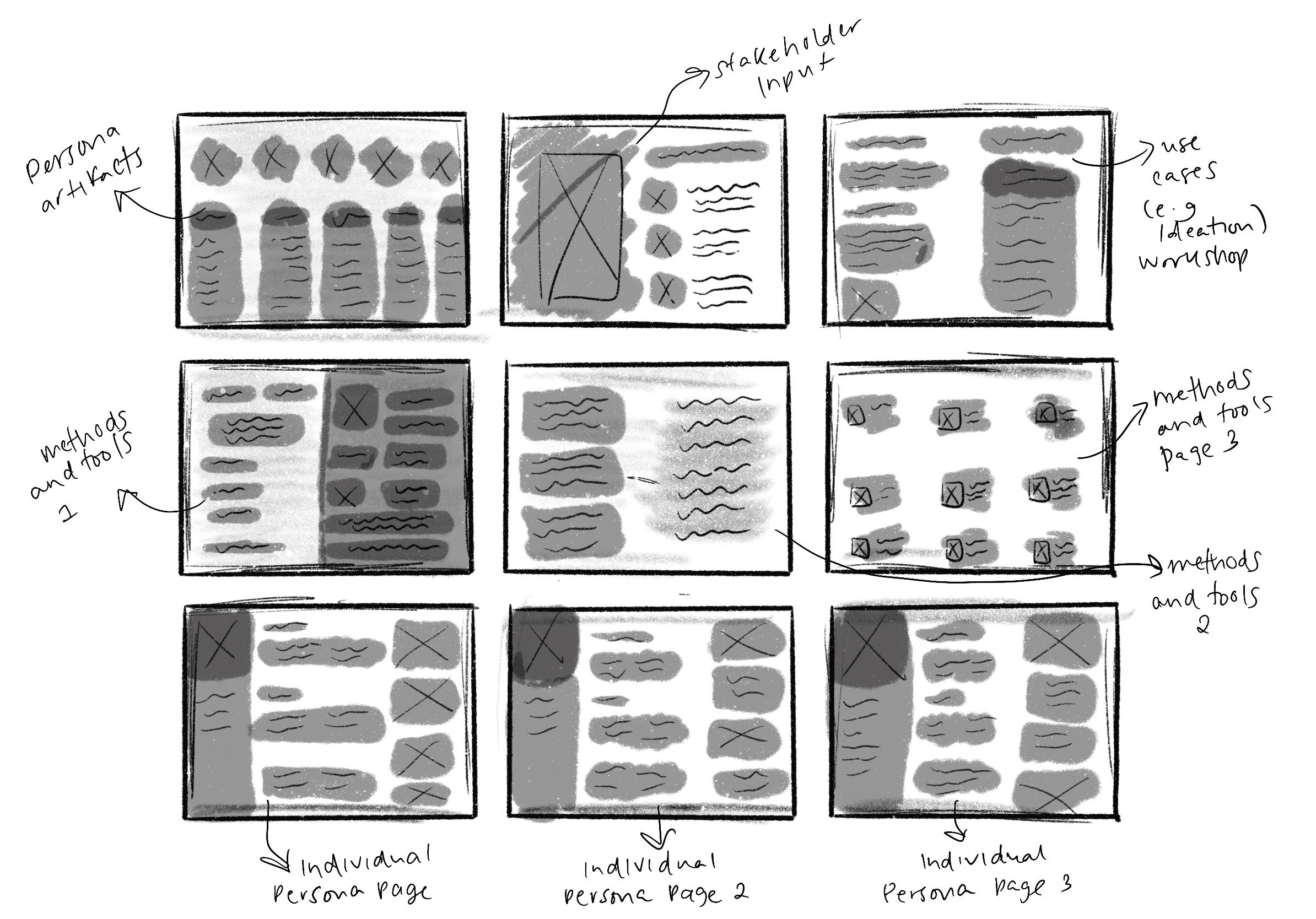
From there, we developed our personas, worked with a designer to design custom characters for each, and began drafting out the playbook components.
The Process
Initial Research + Problem Validation
03 — Internal Surveys
Since this is an internal tool, we wanted to ensure that we also had a very in-depth understanding of the needs of designers & researchers within the company. How do our teams best understand information? What current teachings exist and what tools are currently in place that are allowing them to do their jobs as best as they can? We conducted surveys across several design teams and affinity mapped our findings. This would shape how we designed and iterated on the playbook.
Key Findings
The Solution
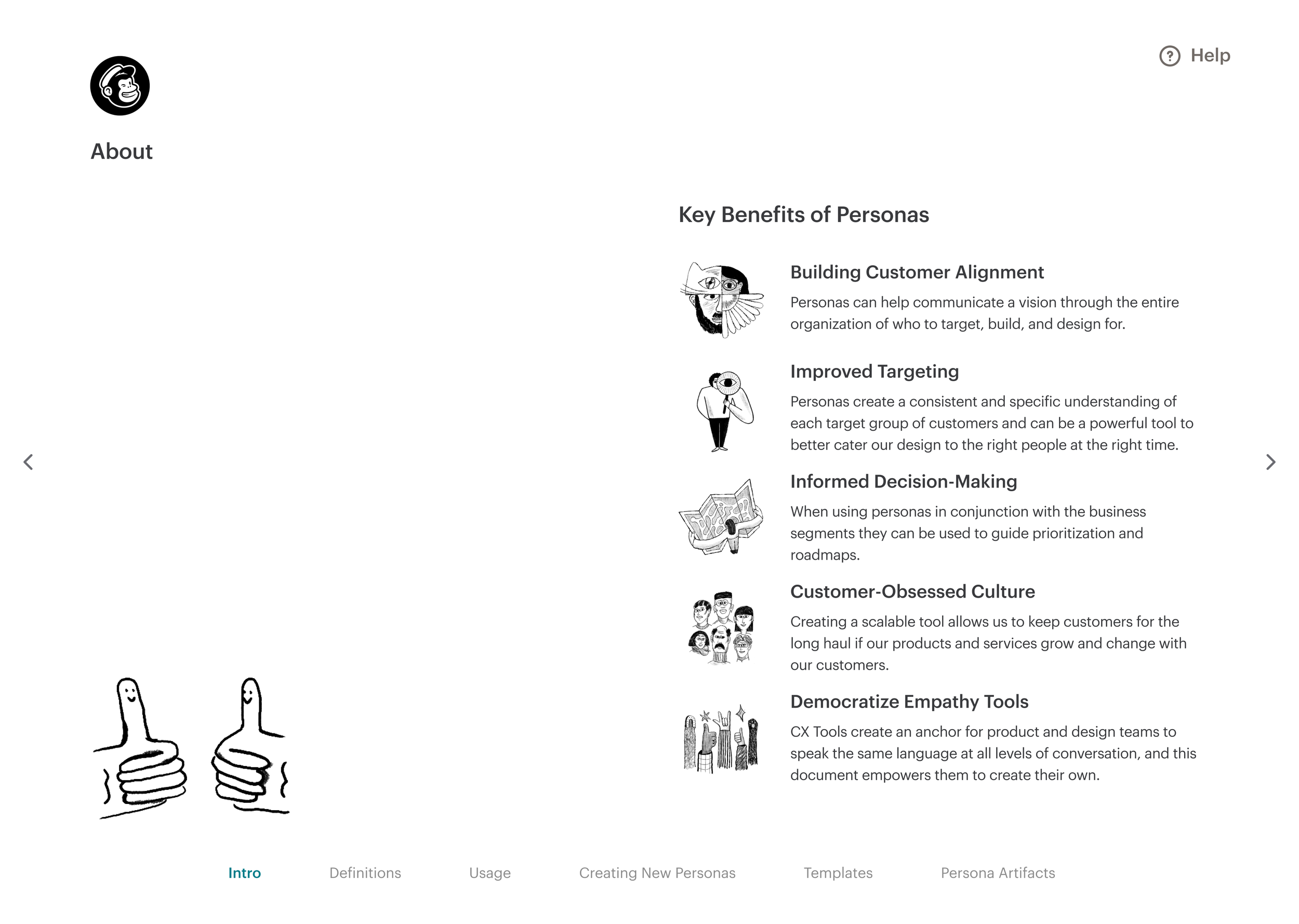
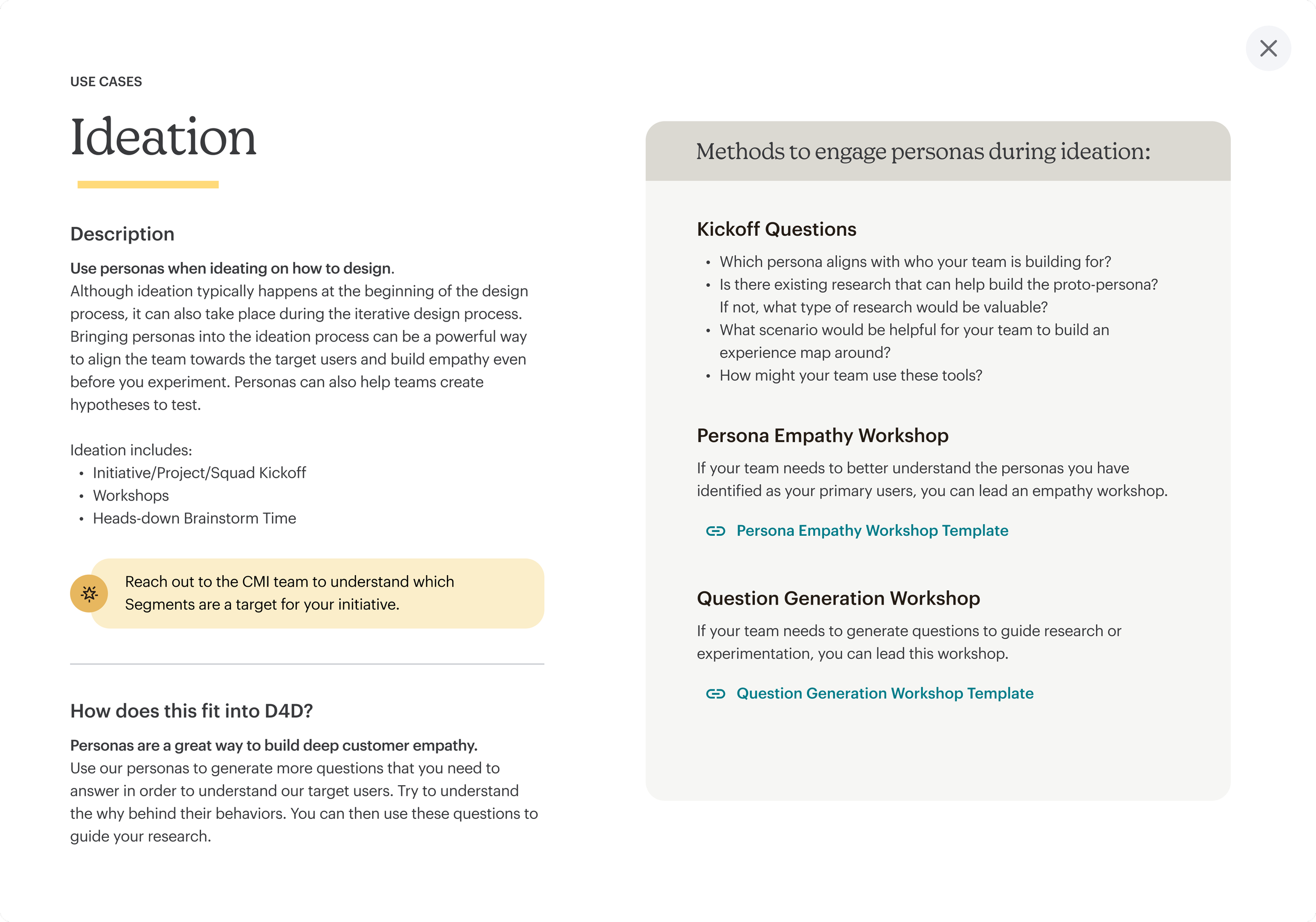
We designed an interactive guide for teams to use, which included definitions of terminology used when referring to our customers, guidance on usage per team, a list of potential use cases during the design process, a toolkit to leverage when creating additional personas, a recruiting guide, as well as templates for workshops and user-related artifacts.
Key Takeaways
Service Design is necessary within every company
Our team were experts in facilitating cross-functional collaboration to explore and define future experiences, bringing them to life through actionable insights, prioritized recommendations, and engaging artifacts. This allowed the customer’s voice to be brought into roadmaps, and ensured design teams are always building towards deeper customer relationshipsCreativity thrives on collaboration
Having the opportunity to speak to so many different teams across the organization, learning more about how we can ensure they have the tools and strategies in place so they can do their jobs to the best of their ability was a key component of designing the playbook. The Design Thinking Process is extremely collaborative, and getting to hear everyone’s input and incorporate all of our key findings into the final playbook was fulfilling and fun.